
While we build the new world, the old one is still here. The counties, states, and countries of the current system, which we call the legacy governments, are still writing rules and still enforcing them. Many of those rules have no rational basis whatsoever. And if we build a new society without finding a way to deal with the system that's already here, it will interfere with our work, and eventually undermine it.
So we need a way to get it off our backs, peacefully, long enough to build. Better still, we need a way to win the people inside it over to Reason. That's what the Take Back Your Rights Plan is for.
Reason, Not Revolution
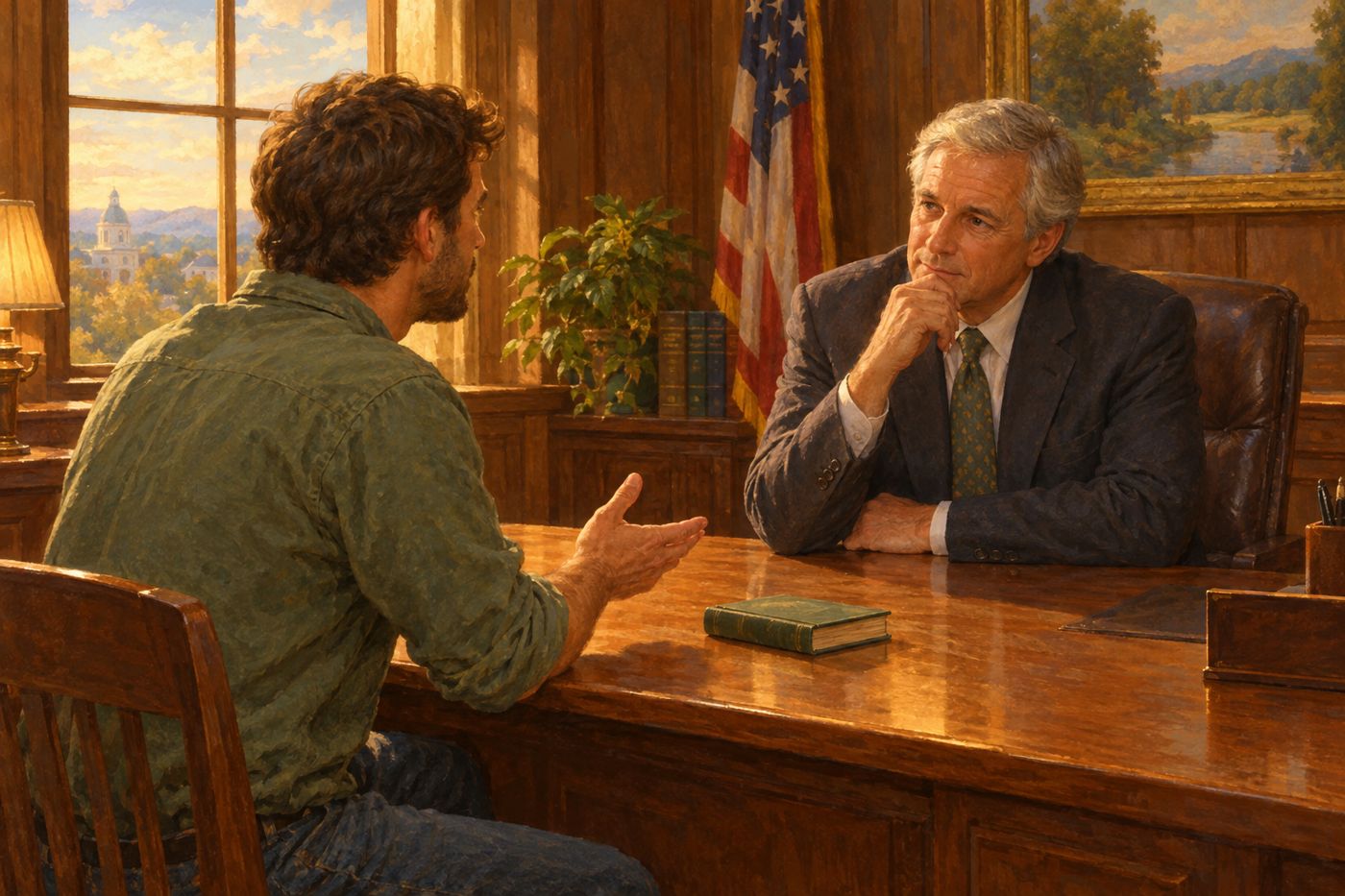
The Take Back Your Rights Plan is a way to neutralize tyranny peacefully, without violence. Instead of armed revolution, it takes back liberty through respectful, honest dialogue, one rule and one office at a time.
It's for the rules you don't merely disagree with, but that have no rational basis at all, the kind that are enforced only because the enforcers are "just doing their jobs." Things like:
- anti-gardening ordinances
- anti-rainwater-collecting ordinances
- forced lawn mowing
- frivolous building codes and "health" codes
- public parks "closed" at night
- blanket anti-dog rules
- anti-homeless ordinances
- the "war on drugs"
- seatbelt and helmet fines
- medical mandates (masks, tests, lockdowns, injections)
And if you're part of a legacy government, and you don't like the sound of this, keep in mind: this is the easy route. When a government becomes so calcified that it no longer responds to the people it governs, one way or another, it falls apart. Change is certain. But you have a say in how it comes. You can help make it peaceful.
Prepare Yourself
Before you go anywhere, know the Plan and the Law of the Earth well. And take care of yourself, in body, mind, and spirit, so that you can speak with clarity. (See Heal Yourself.)
Secure the Meeting
- Identify one specific rule that affects you personally, and that you feel strongly about.
- Identify the institution responsible for imposing it.
- Identify the specific office where the decision was made, which therefore has the power to change it.
- Find out who holds that office.
- Call and ask for an appointment with that person, to discuss removing the rule.
Often you won't reach the decision-maker right away. There will be layers of bureaucracy in between. Find the highest-ranking person who will actually talk to you.
And never take the front-desk person for granted. They didn't make the rule, so don't take your frustration out on them. Their jobs are often boring and thankless, and they're used to being yelled at. Be kind, be patient, and joke with them if you can. If they understand what you want and agree with it, they can send you up the chain. Even if they don't, they'll remember you as one of the decent ones.
Explain Your Position
Once you're in the meeting, it's fine to warm up and get to know each other first. When you're ready, explain what's bothering you, ideally as a simple story that doesn't accuse anyone:
- Begin with honest appreciation.
- Describe the experience that led you to run into the rule.
- Explain how the rule harms you.
- Ask for an explanation: a rational defense of the rule.
For example: You have lovely parks here, and I love watching the sunset in them. But since the parks close at sunset, I have to leave the good spots before the sun even goes down, and hurry back to my car for fear of being fined. The whole point of being in nature is to unwind, and this rule takes that away from me. Since it's doing me harm, I'd like to understand why it's necessary, and what good it actually does.
Look for the Stump Point
The officeholder will usually explain the reasoning behind the rule, and chances are the reasoning will be vague: "It's for public safety."
Now your job is mostly to ask questions, not to make claims. Ask them to be specific:
- Whom is the rule keeping safe?
- What danger is it keeping them safe from?
- How, exactly, does the rule cause that danger to shrink?
When you get an answer that doesn't make sense, don't dispute it. Pursue it. Follow its logic all the way to the end. If parks at night attract poachers because no one's watching, isn't that because the law-abiding people have been locked out? If parks at night gather criminals in one place, wouldn't the police love to know exactly where to find them?
Eventually, ask the key question: Are you saying that wherever anything bad could possibly happen, the government has unlimited authority to do whatever it likes to prevent it? Very few officials will say yes. And once they say no, they've admitted that the government's authority has limits, which means some rules can overstep them, and that every rule needs a real reason that stands up to scrutiny.
All of this leads to the stump point: the moment they realize, privately, that the rule doesn't make sense and they can't defend it. They will almost never say so out loud. But watch closely, because you'll see it on their face. And when you do, there's only a narrow window before they grow uncomfortable and defensive, because having a belief taken apart is painful. So you need something ready to put in its place.
Introduce Natural Law
That something is natural law. Once the old belief has cracked, offer the alternative. Open the Law of the Earth with them, beginning with Benign Sovereignty and Rationality, and go through it together, line by line.
Before the meeting ends, ask for a commitment: that from now on, they'll respect the principles of Reason and do their best to make their official decisions conform to them. We call this Pledging Allegiance to Reason, though you can put it in your own words. The point is a real commitment, one they'll take seriously, and a sign that you can count on them for honest dialogue the next time a problem comes up. Because you'll be back.
If They Won't Meet
If an office refuses to meet at all, bring your friends. It's much harder to turn away a group than one person, and often that's all it takes.
If even that fails, a peaceful protest outside the building may be needed. But remember: the protest has only one demand, which is a meeting. Don't make policy demands on the street. The meeting is where you explain what you want changed, and why. The protest is only there to get the meeting.
Hold the Line, Kindly
Be warm, but never forget what's at stake. Enforcing a rule that has no rational or moral basis is harm, and the people who carry out harm are responsible for it, whatever their job title. "Just following orders" has never been a valid defense; the world settled that at Nuremberg. Make sure the official understands this, not as a threat, but as the truth. Most people inside the system aren't evil. They're confused, and they have families to feed. The Plan offers them a dignified way out.
Why This Is a Pillar
Legacy governments will be with us for a long time, and many good people work inside them. Every official who pledges allegiance to Reason is one less obstacle, and often one more ally. Some of them will help build the new world. And when the Republic of the Earth is formed, the legacy governments will have a voice in it, through the Senate, to help guide the transition.