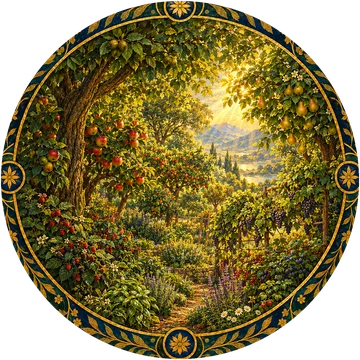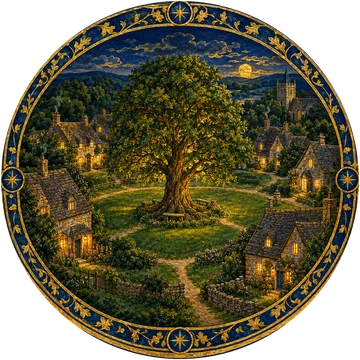
A body is made of organs, and organs are made of cells. A healthy civilization is made the same way. The city is a collection of townships, and the township is a collection of villages. The village is the cell. If the cells are healthy, the body can be healthy. If they're not, nothing done at the top can save it.
A village is small enough that everyone can know everyone: somewhere between 30 and 300 people, and ideally about 150. In a city, that might be a single residential block. In the suburbs, a few adjacent streets. In an apartment building, the building itself.
Organelles
A cell is a semi-self-sufficient unit. It feeds itself, repairs itself, and keeps itself alive. The organelles inside it are not. The mitochondria make energy, the ribosomes build proteins, and neither could survive alone. Only together do they make something that lives.
People are the organelles of the village. No matter how much we kid ourselves, no individual is self-sufficient. The farmer needs someone to make his clothes. The weaver needs someone to heal her when she's sick. The healer needs someone to help grow the food. And so on, all the way around the circle. Nobody is complete alone, and nobody was ever meant to be.
But food is never just one person's job. Everyone in the village should be connected to it at least a little, even if it's only tending a garden by the door or feeding the chickens each morning. A village where only a few people grow the food has just rebuilt the supermarket on a smaller scale.
It's the combination of all of them, the village, that is meant to be self-sufficient, and the Multi-Layered Economy shows how far. The goal is for every village to be self-sufficient in the Stone economy: food, water, clothing, shelter, healing, and one another. Every township, in the same way, aims to be self-sufficient in the Metal economy, and every city in the Steam economy of industry and machinery.
Mostly. Stockholm is not going to grow olives, and Phoenix is not going to grow blueberries, so they'll trade for them. Rare-earth elements will always come from wherever they're found. And to be very clear, none of this is a ban on imports. No force is involved. It's a goal, not a mandate.
If the word "socialism" just crossed your mind, take a breath. This isn't that. Nothing here is run from a capital city, and nothing is taken from anyone. It should feel liberating, because self-sufficiency, even at the scale of a village, is light years better than depending on big government and big corporations in some faraway capital.
Thirty Houses, One Tool Shed
Picture an ordinary residential block of about thirty houses. Right now, each of those houses probably has its own lawnmower, its own ladder, its own hedge trimmer, and its own drill, most of which sit unused 360 days a year. Thirty lawnmowers, mowing thirty little lawns, every one of them separated by a fence.
Now take down the fences. Make the lawns one shared green. Put one tool shed in the middle with three good lawnmowers instead of thirty, and every tool anyone on the block might need. Everyone saves money, everyone has better tools, and everyone sees their neighbors.
Then keep going:
- Chickens. A shared flock, free to roam, and fresh eggs for everyone.
- Rainwater barrels. Collect the water that falls on your own roofs, for the gardens and more.
- Gardens. Every house has a personal garden right beside it, and everything else that grows is shared.
People complain that eggs have become unaffordable. But why are you buying eggs at all? A dozen chickens on the village green will feed a block. And every need you meet yourselves is one less thing anyone can use as leverage over you. That's what independence actually means.
How to Begin
None of this needs anyone's permission. It just needs neighbors willing to talk to each other. Here is a simple sequence, and none of it has to be perfect. You can change it all later.
- Identify the area. Pick a natural boundary: a block, a building, a cluster of streets. It doesn't need to be perfect.
- Choose a place and a time. Somewhere everyone can gather, at a time most people can come.
- Knock on every door. Give everyone in the area notice of the meeting, along with an explanation of why.
- Hold the first Village Council.
- Acknowledge natural law. The first act of the Village Council is to acknowledge the Law of the Earth. Discuss it in council until everyone does, and answer every question and objection.
- Agree on how to resolve conflict. Before anything else gets built, know how you'll settle disagreements, by conversation and the Law, never by force.
- Make a permaculture plan. Decide together what to grow, and where. (See Permaculture.)
- Share the work without money. Obtaining seeds, preparing soil, planting, watering, harvesting, cooking, washing, and cleaning up: decide together who does what, and whether each job rotates or belongs to someone who loves it. Anyone can propose, the council votes, and you can always change it as you learn.
- Show the next village. Once it's working, invite the neighboring blocks to see it, and help them begin.
From there, villages link together into townships, and townships into cities. That part of the story is told in Land-Based Sequential Delegation.
What Makes a Village
A group of homes becomes a village when:
- most of its food is grown within walking distance,
- every home is within walking distance of every other, and most are within shouting distance,
- it has a common green at its center, of grass and flowers amidst a grove of trees, and
- its council meets on that green at least once a week, with most of the residents there most of the time.
The council follows a simple order, opening and closing in stillness:
- Meditation and invocation
- The state of the village
- Initiatives
- Votes
- Meditation and invocation
In the buildings we already have, a village is most likely one apartment building, or one block of houses centered on the shared green space of the back yards, not on the street.
What a Village Might Look Like
These are suggestions, not rules. Every village will find its own shape. But here is one picture of what it could be.
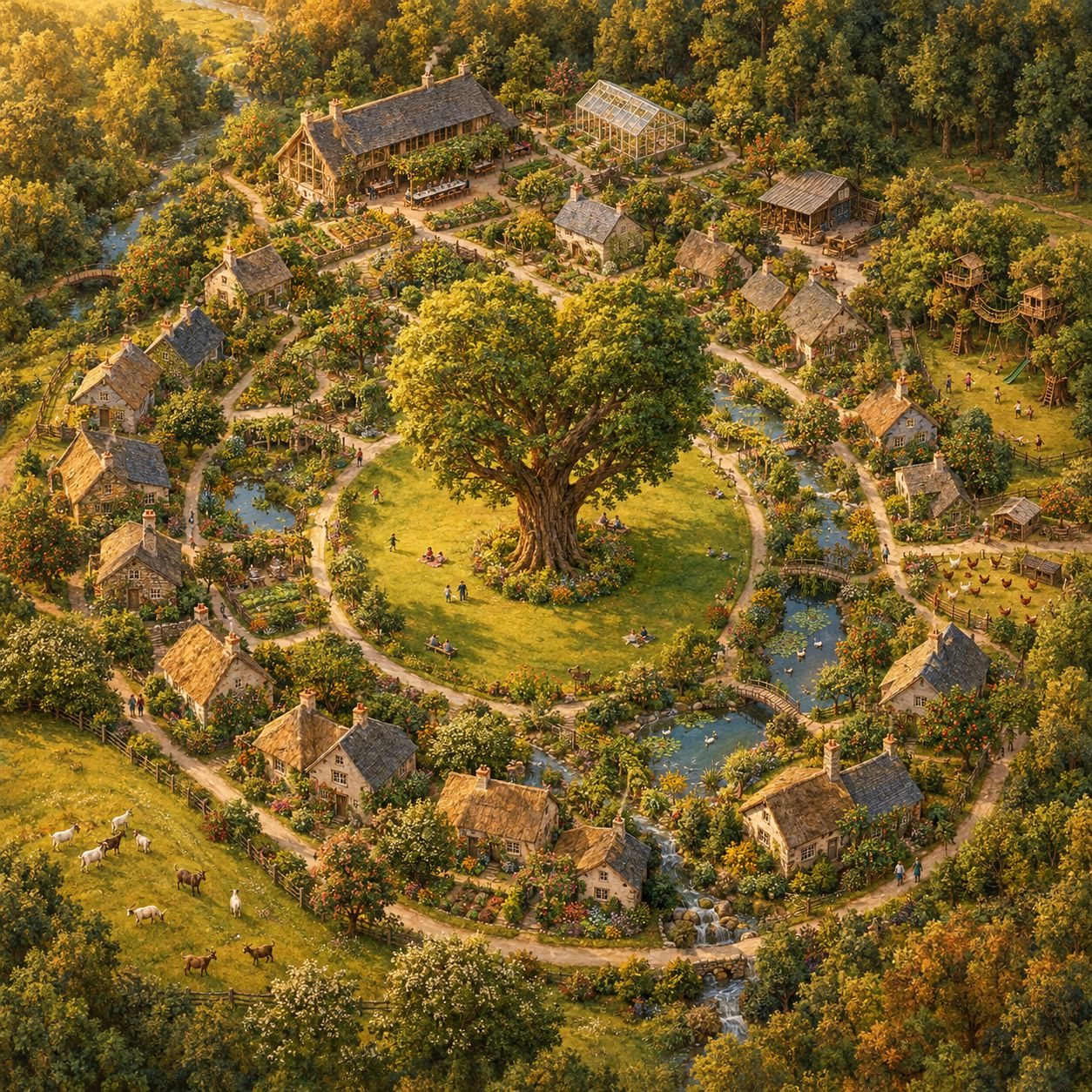
The Village Green. At the center is a green with room for about a hundred people. This is where the council meets. It is round, or close to it, and open to everyone, day and night, all year. It is kept all natural, with nothing built or stored on it, and no shoes are worn on it unless the weather is freezing. In the very center stands the Heart Tree, the spiritual center of the village.
The Village Garden. Around the green is the Village Garden, with water woven through the land: ponds and little streams, stocked with frogs to keep the mosquitoes in check. Through it all are dwellings, trees, walkways, ponds, exercise equipment, gazebos for meditating, grottos and shrines, with food-producing plants scattered throughout, in every place they'll fit.
Gardens and foraging. Each home has its own garden right beside it. Every food plant outside the personal gardens is fair game for anyone to eat. At such a small scale, everyone knows everyone, so no one abuses it. In the evenings, the children fan out across the village to gather ingredients for supper.
Shared spaces. A communal kitchen and dining hall, a swimming pool, a gym, a greenhouse, a dance hall, a workshop, and a bath and sauna. Not every village will have all of them, and none needs them all at once.
The Kids' Village. Near the center is an area belonging to the children. Every child is a member of both their own family and the Kids' Village, and can move freely between the two. It is looked after day and night by carers the village elects in council, on the Green. Education there is exploratory play: whatever the children are curious about, the carers do their best to help them explore it.
The animals. One group of each kind: a pack of pups and a flock of chickens and ducks, all free to roam; a herd of goats under a shepherd; and a family of cows under a cowherd.
Health and worship. There are no "sick gathering" places. Healers go to their patients' homes. Churches, mosques, and temples begin at the township level, though small shrines and wilderness chapels are welcome anywhere, blended into the land.
Why This Is a Pillar
The village is where the Blueprint stops being an idea and becomes a way of life. It's where the healthy food is grown, where the children are raised among people who know them, where conflicts are settled face to face, and where every larger body begins. Every township, every city, and finally the Republic of the Earth is built out of villages. Get the village right, and everything above it has a chance.