Every ideology has a picture of paradise. Technolatry's picture shows up again and again in our science fiction, our advertising, and the dreams of our tech leaders.
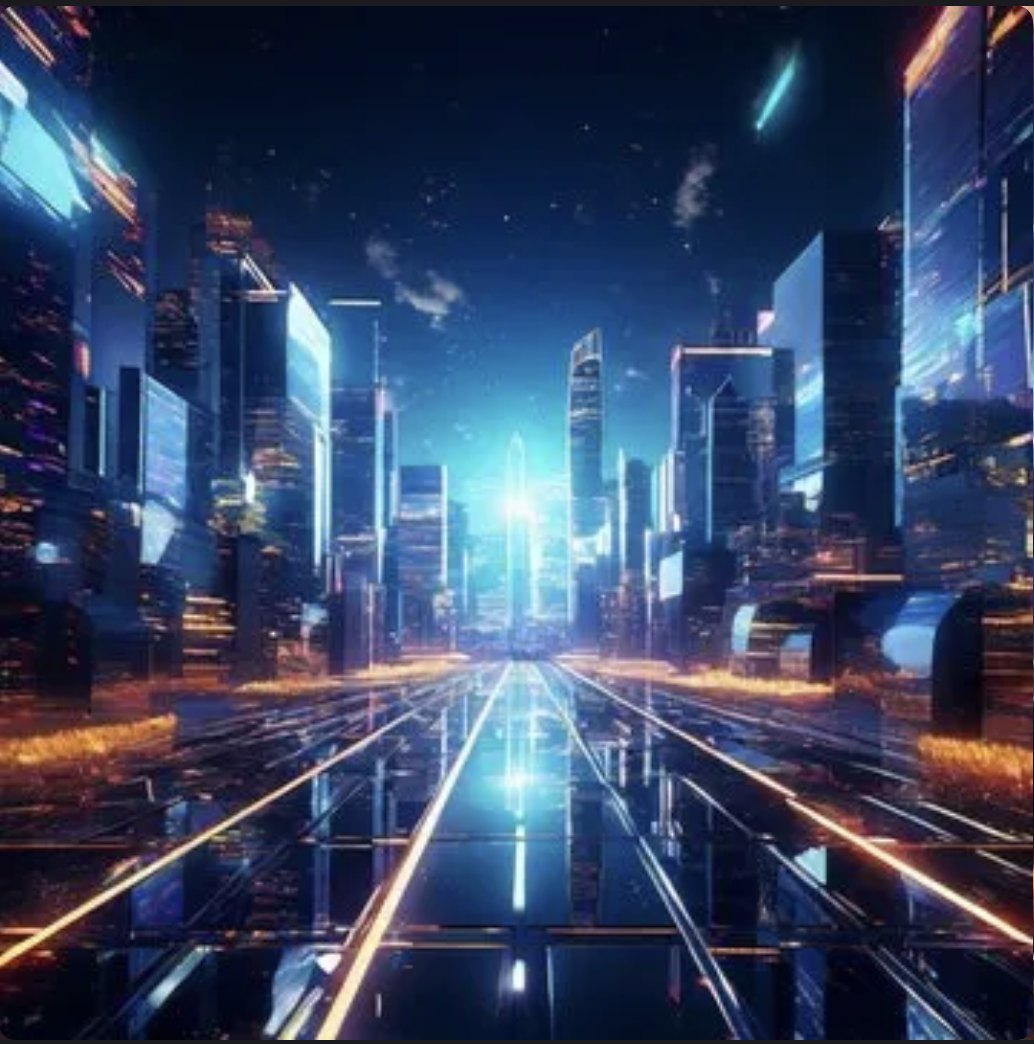
It's a city. A city that never ends.
The City That Covers the World
In Star Wars, the capital of the galaxy is Coruscant, a planet whose entire surface is one continuous city, layer upon layer of towers, with no wilderness left at all (Wikipedia).
In Isaac Asimov's Foundation novels, the capital of the Galactic Empire is Trantor, a world whose whole land surface is enclosed under metal. It's home to tens of billions of people, and it can't feed itself. Its food is shipped in from other worlds (Wikipedia). It's the longest chain imaginable. (See Another Place for the Chain to Break.)
In The Jetsons, the cheerful cartoon vision of the future, the family lives in an apartment raised high above the ground on a pillar, and the ground below is hardly ever seen (Wikipedia).
Look at what's missing from all of these. Forests. Rivers. Soil. Animals. Silence. The night sky. In technolatry's paradise, Nature hasn't been healed or protected. It's been paved over and forgotten.
Why Do They Want This?
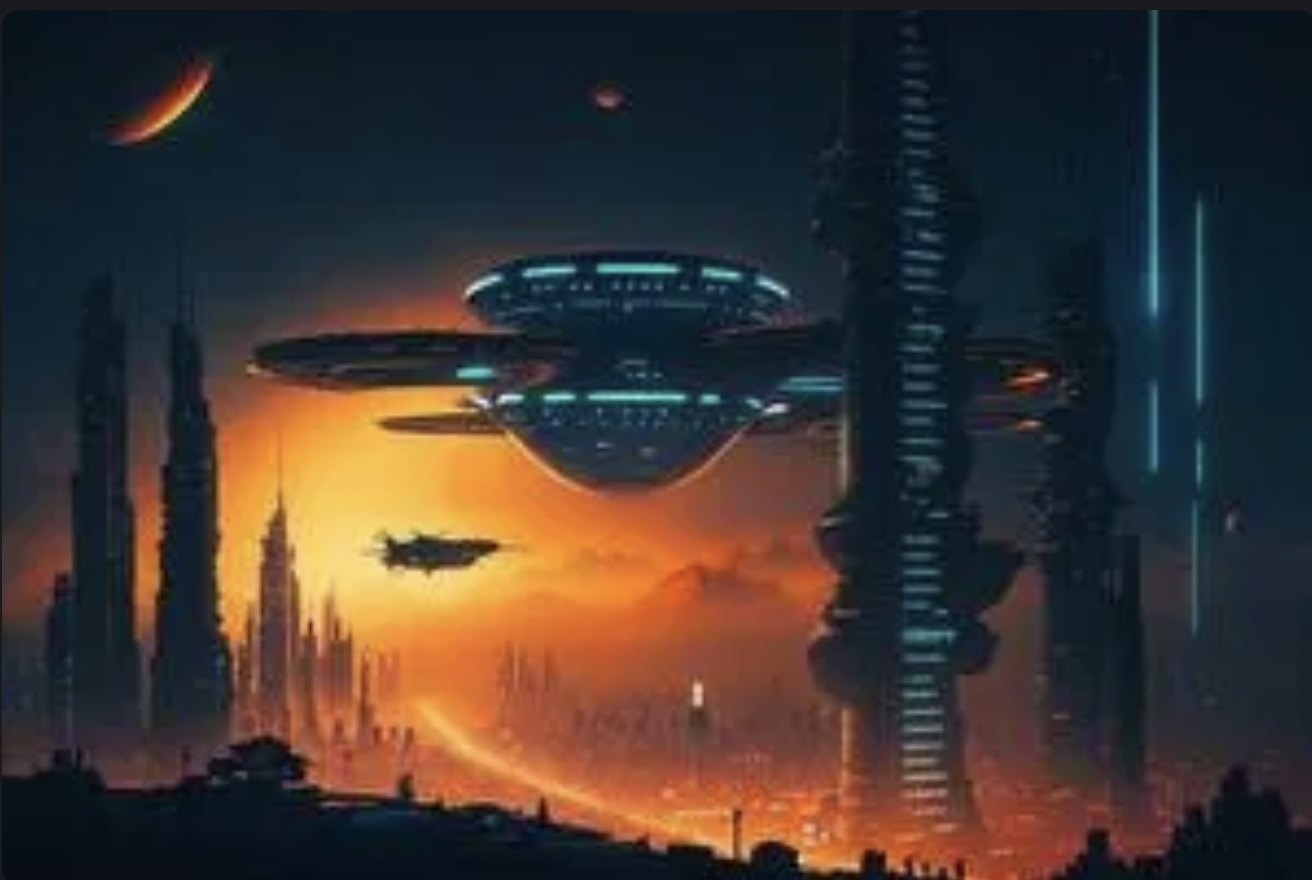
This picture follows directly from the seed of technolatry: the belief that Nature is wrong, and that a world made by human hands would be better. Follow that belief all the way, and you arrive at a planet with nothing natural left on it. (See The Machine God.)
And you can see the first steps of it already, in every forest cleared for a subdivision, every field paved for a parking lot, and every "smart city" plan that promises to wire every street with sensors.
The People Who Chose a Valley
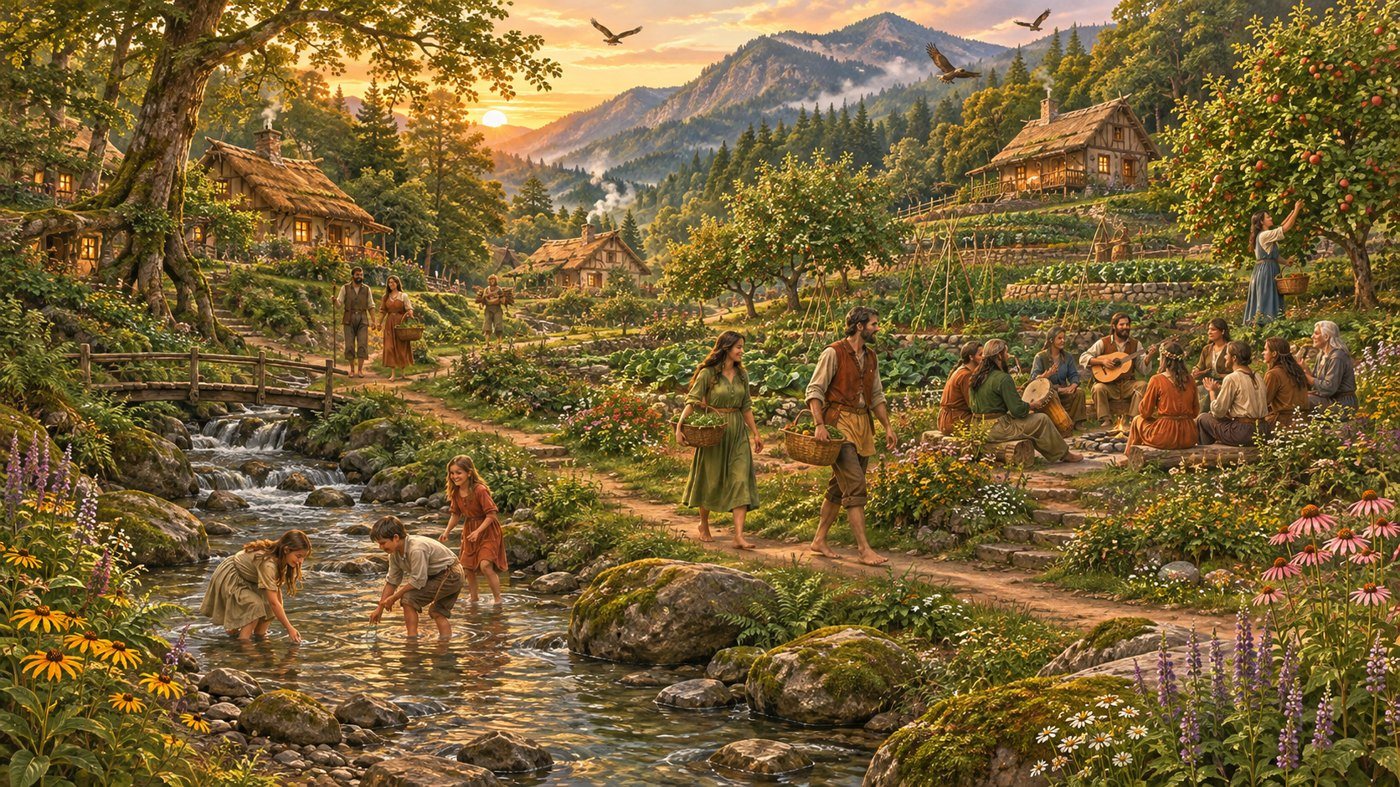
There's another picture in our science fiction, much rarer, and much more beautiful.
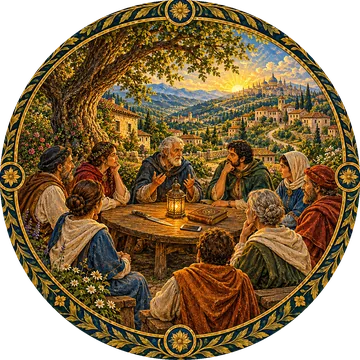
In Star Trek: Insurrection (1998), the crew of the Enterprise meets the Ba'ku, a small community living in a green valley, farming by hand, building with wood and stone, and making art. At first, the crew assumes they're a simple, primitive people. Then they learn that the Ba'ku understand advanced technology perfectly well, and once had starships of their own (Wikipedia).
They chose to put it down.
As their leader, Sojef, explains: "Our technological abilities are not apparent because we have chosen not to employ them in our daily lives. We believe when you create a machine to do the work of a man, you take something away from the man." When Captain Picard asks whether they have warp drive, another of them answers, "But where can warp drive take us, except away from here?" (Wikiquote)
The Ba'ku weren't backward. They had seen where their technology was taking them, and they chose a different road.
Which World Do You Want?
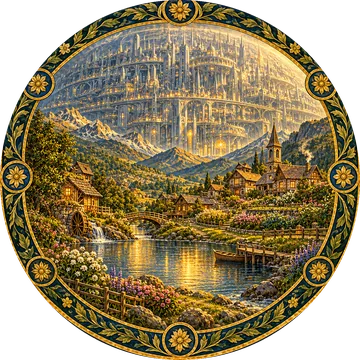
Put the two pictures side by side. On one side is a planet sealed under metal and glass, glowing day and night, fed by machines, with every human life hanging from a chain of infrastructure. On the other is a valley, where people live among trees and rivers, know their neighbors, eat what grows around them, and keep their tools in their proper place.
Technolatry tells us that the first picture is the future, and that the second is the past. But that's not a law of nature. It's a choice. Civilizations choose their direction, and we can choose ours. (See Who Steers?.)
The Earth Party's choice is the valley, with every age of knowledge kept alive and in its place, as described in The Multi-Layered Economy.